
Changing the final drive ratio: why and when.
Inside the differential, two separate sets of gears rotate. One set of smaller gears is designed to allow different wheel speeds so the car can corner; these are the spider gears that differentiate. The other set of gears is your final drive ratio (or differential ratio).
Gears
These gears consist of a matched set of two: a crown wheel (left in the photo) and a pinion gear (right in the photo). Power from the engine is sent to the pinion, which drives the crown wheel rotating at wheel speed.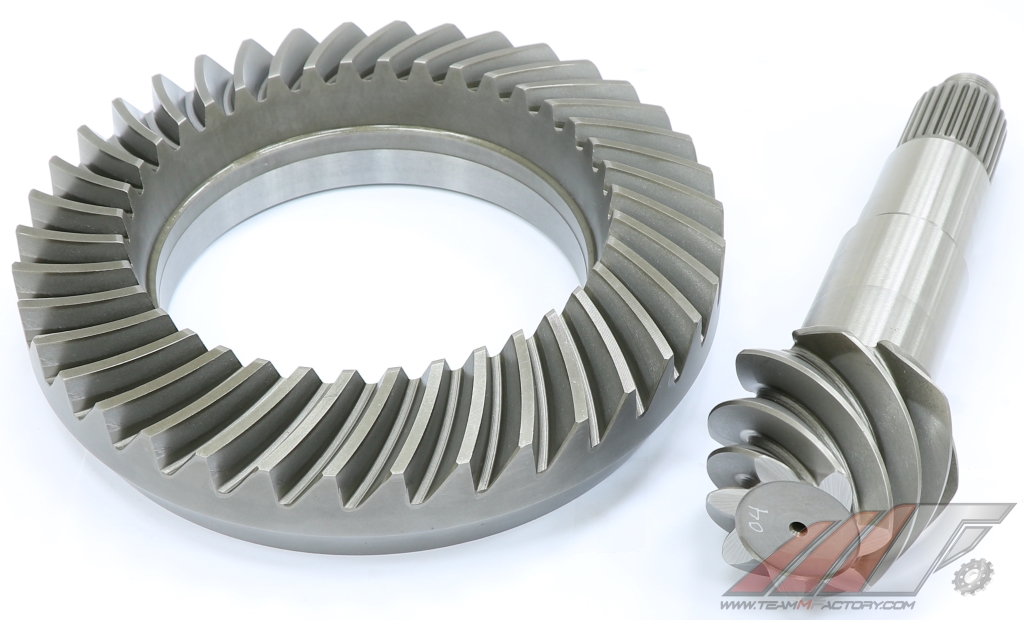
The pinion is always smaller than the crown wheel, meaning the pinion rotates faster than the crown wheel. This reduces the rotational speed reaching the wheels while multiplying torque. Think of a mountain bike in a low gear, where you pedal quickly while the wheel turns slowly. Without this speed reduction, pulling away from a standstill would be difficult—much like accidentally trying to set off in 6th gear. The lower the numerical final drive ratio, the harder it is for the car to pull away and accelerate.

The ratio in which the crown wheel & pinion achieve this reduction is expressed as the final drive ratio. A 3.91 differential has a pinion that must complete 3.91 revolutions to turn the crown wheel through 1 full revolution. Once the crown wheel has completed 1 revolution, your rear wheels have also completed 1 revolution. There is no further gear reduction between the crown wheel and the wheels.
Low ratio:
Changing your final drive ratio can therefore have a dramatic effect on how the car performs. A numerically low ratio (tall gearing) makes the engine work harder and dulls acceleration, while keeping cruising RPM low on the motorway and potentially reducing fuel consumption. Your theoretical top speed also increases, because you reach the rev limiter later in top gear.

High ratio:
Changing the differential crown wheel & pinion to a numerically higher ratio is widely done in motorsport, and can also be a rewarding upgrade for fast-road drivers. With a higher-ratio gearset, more torque is delivered to the wheels. Effectively, every gear becomes a step shorter. If an engine producing 100 Nm of torque uses a 2.0 ratio, it delivers 200 Nm of torque to the wheels, whereas a 4.0 ratio will deliver 400 Nm.
A 474 hp Camaro (camera car) with a 3.91 ratio against a 485 hp Camaro (black) with a 3.45 ratio:
However, this comes at the expense of higher engine speed. The 4.0 ratio in the example above must spin at twice the RPM of the 2.0 ratio for the same road speed. The standard final drive ratio fitted by the manufacturer is typically a compromise aimed at fuel economy, low motorway cruising RPM, and a high top speed. If your goal, however, is stronger acceleration, keeping the engine in its optimal rev range, initiating a drift more cleanly on throttle, or setting faster times on the circuit, rally stage, or drag strip (where ultimate top speed is less critical), then a higher final drive ratio is recommended.
With a higher final drive ratio, you can make fuller use of all your gears on your favourite mountain pass, slalom course, drift track, or circuit. Naturally aspirated, high-revving cars benefit particularly strongly from a ratio change: a difference in ratio is seven times greater at 7,000 RPM than at 1,000 RPM.
Is this possible on my car?
Every car has a final drive—whether front-wheel drive, four-wheel drive, or rear-wheel drive. Four-wheel-drive cars, however, require two sets of gears: one for the front axle and one for the rear axle. Whether alternative gearsets are available for your car varies considerably, and we are happy to look into the options for you. In some cases only an aftermarket crown wheel & pinion set is available, while in many others diesel or automatic variants of the same car came from the factory with a different ratio whose gears are directly interchangeable. Contact us regarding installation in your car.
By way of illustration, a BMW E30 325i with a standard 3.73 final drive ratio is frequently converted to 4.10 for a sharper, sportier driving experience. For rally applications, even shorter ratios such as 4.45 are commonly chosen.
Calculating
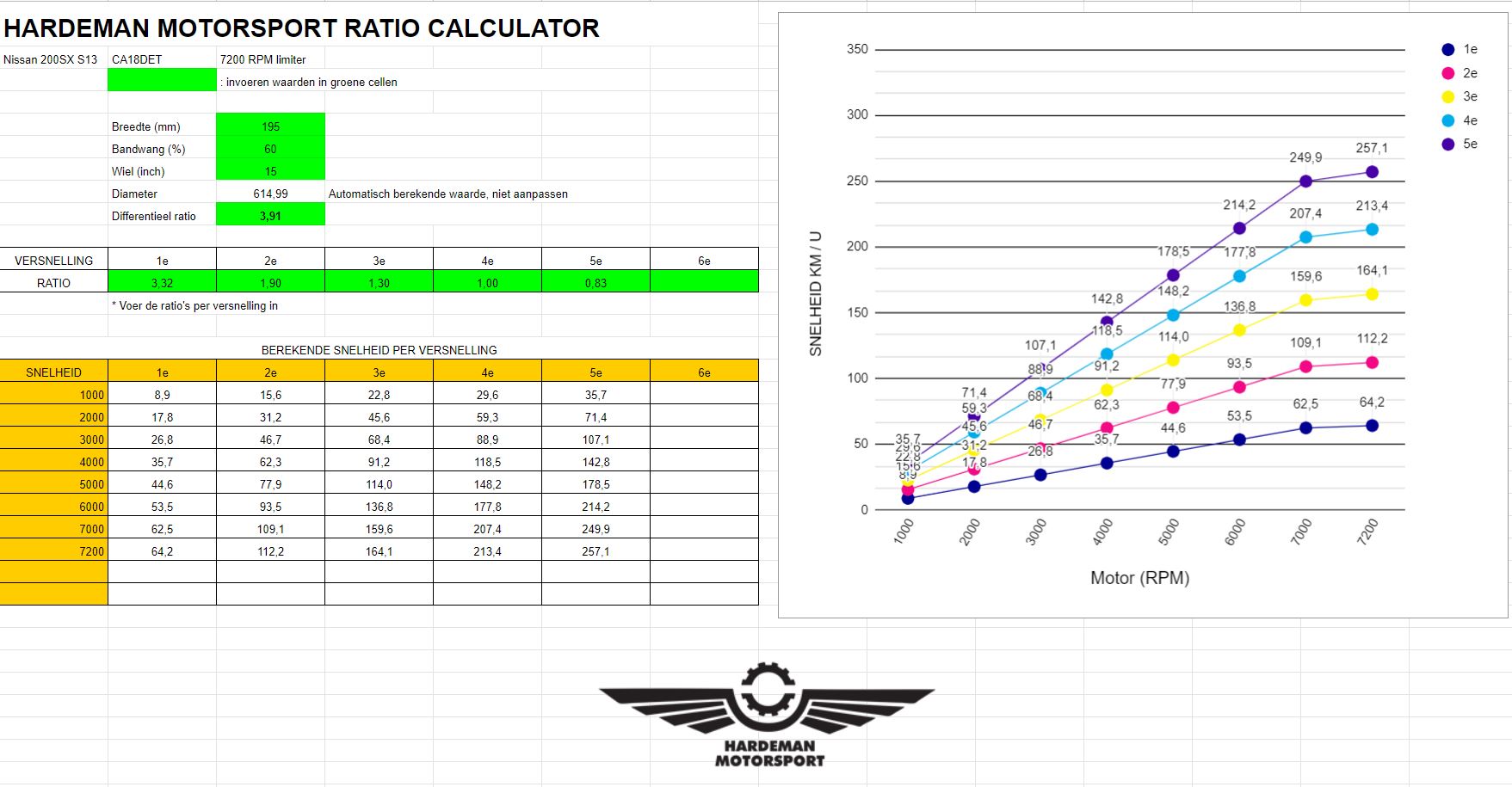
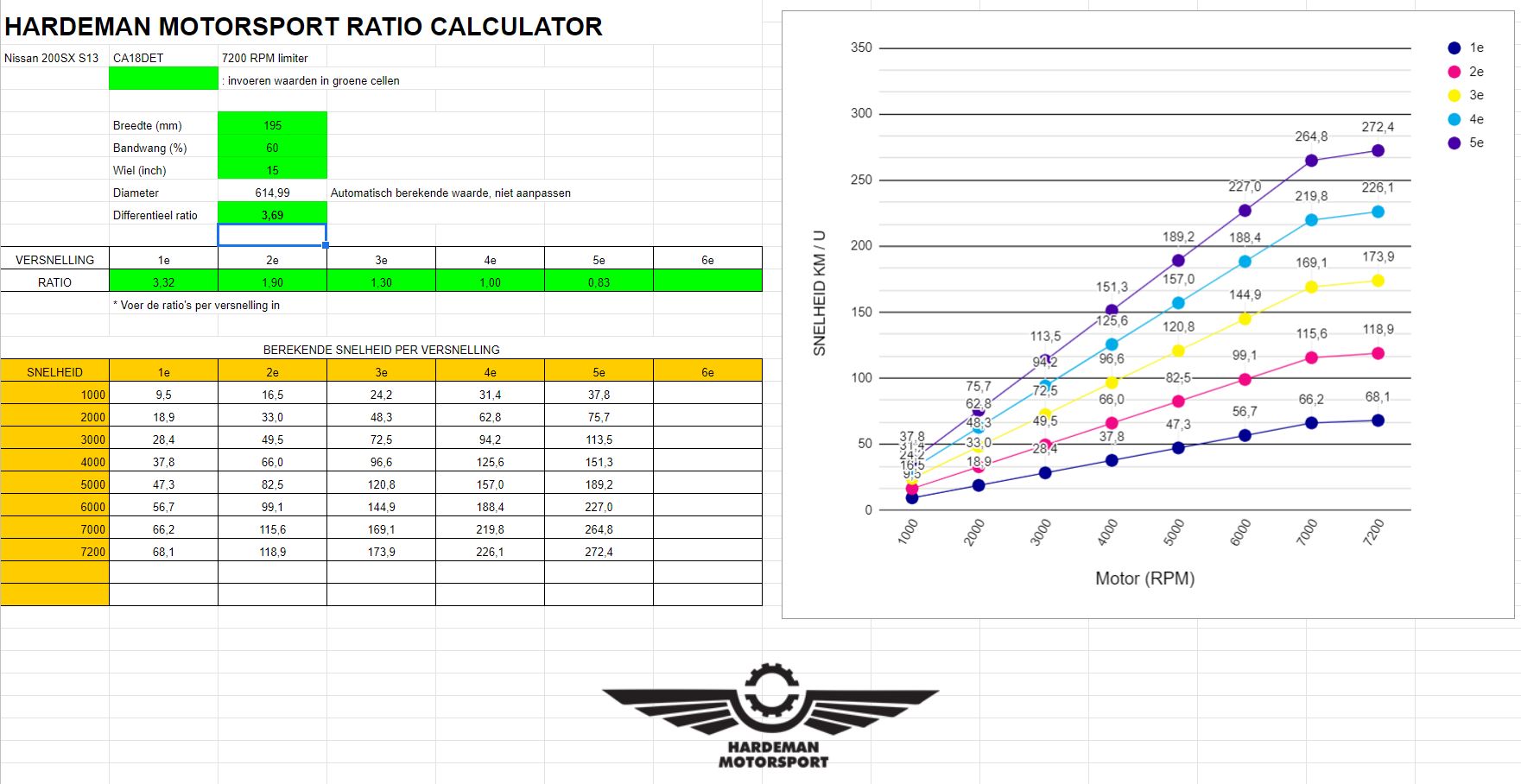
If you want to calculate the best ratio for your setup, we can assist you. Using a gearing chart, we can show the exact road speed at any engine RPM in every gear:
Strengthening:
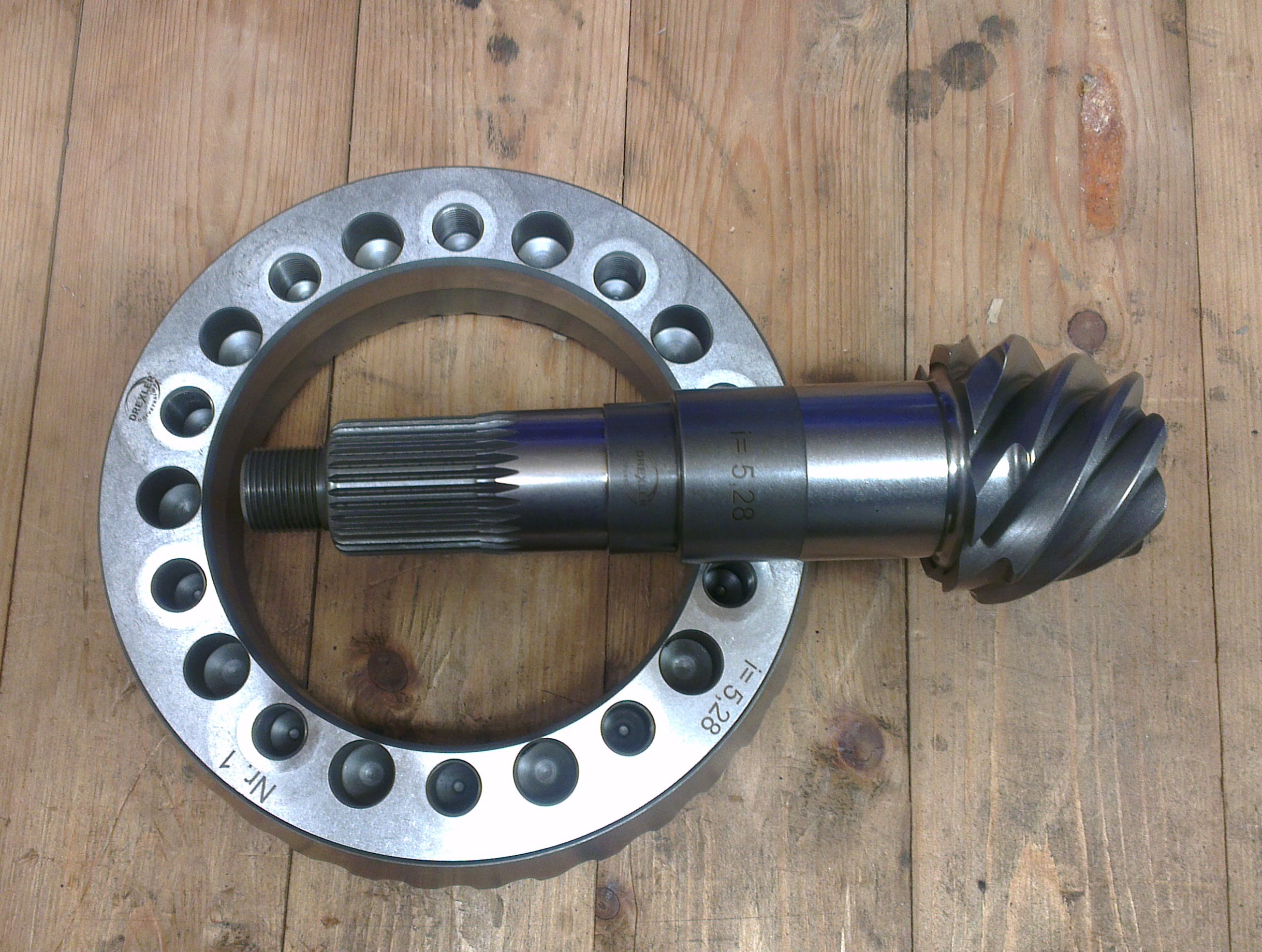
The higher the final drive ratio, the smaller the pinion head becomes and the smaller the teeth on the crown wheel—even though a higher ratio must handle greater torque multiplication. To address this, we offer gear strengthening: we can treat virtually all gearsets, with the greatest durability benefit seen on standard factory gears. Drexler gearsets are very expensive, as they have already undergone dedicated motorsport strengthening processes.
Drifting:
Shorter final drive ratios are also widely used in drifting. Because more torque is sent to the wheels in each gear, more gears become capable of cleanly breaking traction, giving you a wider selection of gears to drift in. Where you might otherwise never be able to pull 3rd or 4th gear, a shorter ratio allows you to put them to full use.

Final drive simulator – the drag race
In our final drive simulator, you can compare what two different final drive ratios deliver—along with their trade-offs. Please note that this simulator does not account for limited grip, so the cars launch at full throttle from a standstill with zero wheelspin. While that is not completely realistic for every real-world situation, there are natural limits to what a browser model can simulate.
To check which configuration is fastest for a specific circuit, pull up onboard video from your latest fast lap. Note the apex (minimum corner speed) and the peak speed reached right before the next braking zone. Enter those speeds into the simulator, note the result, and repeat the simulation for the next set of apex and braking-zone speeds around the lap.
Engine Curve (Nm & HP)
Wheel Torque (Nm)
Contact us for a more detailed gearing diagnosis tailored to custom gearbox ratios.