Not every limited-slip differential (LSD) is suited to every application. That is one of the primary reasons why a clutch-type LSD is far more popular in motorsport than other differential designs. Different conditions, chassis setups and drivers often call for very different differential characteristics. Fitting an off-the-shelf LSD to a standard road car is straightforward, but as soon as modifications are involved or the car is driven competitively, a bespoke setup makes a decisive difference.
The limited-slip differential has a major influence on vehicle dynamics, particularly when pushing towards the limit of the car’s performance. As soon as the car’s behaviour under load becomes critical to your lap times or control, paying close attention to your differential setup is well worthwhile.
Key factors when setting up your differential include:
Vehicle weight
Power output and torque delivery (naturally aspirated or forced induction)
Intended use (road, circuit, drift, etc.)
Differential type
Drivetrain layout: front-wheel drive, mid-engine, AWD, etc.
Which differential types are adjustable?
Not every type of differential offers the same degree of adjustability:
Open differential. An open differential is neither designed for locking action nor built to withstand the internal loads an LSD handles. Apart from welding it solid, we strongly advise against fitting spring-loaded LSD conversion inserts into an open carrier.
Spool or welded diff. Non-adjustable.
Torsen / Helical (gear-type LSD): Operates via worm gears. Its torque-biasing behaviour is mechanically fixed by the gear helix geometry, leaving virtually no scope for manual tuning. Preload can occasionally be altered slightly—as on certain Quaife units—but the practical effect is minimal.
Viscous LSD: Operates through fluid shear using silicone fluid. It responds more slowly and is not modularly adjustable. Even so, by varying silicone fluid viscosities and internal clearances we can achieve meaningful changes on certain serviceable units (many OEM units are permanently sealed and cannot be modified).
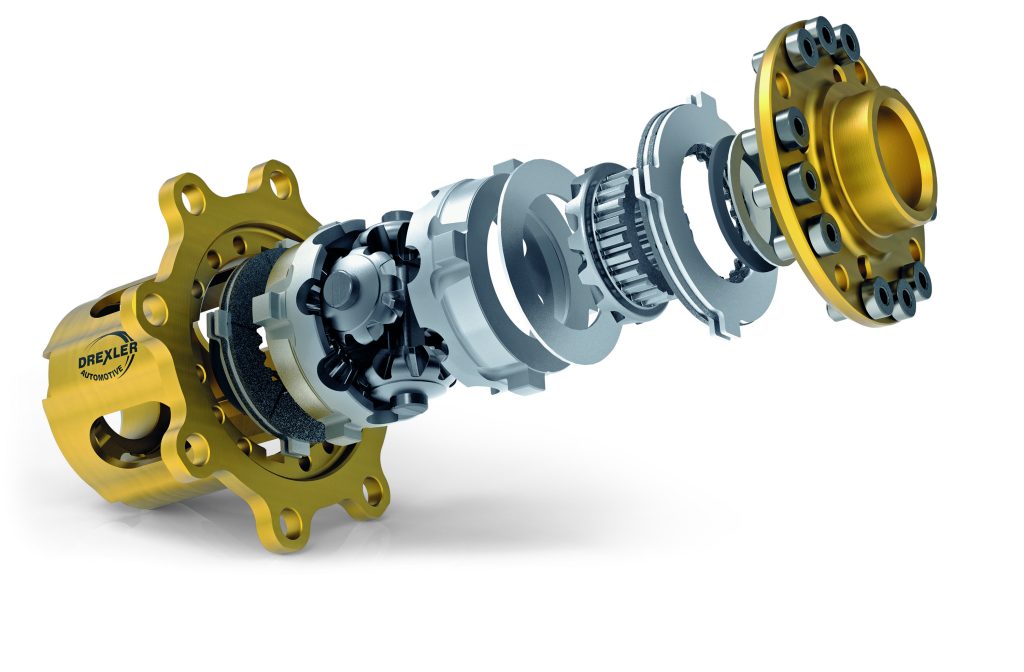
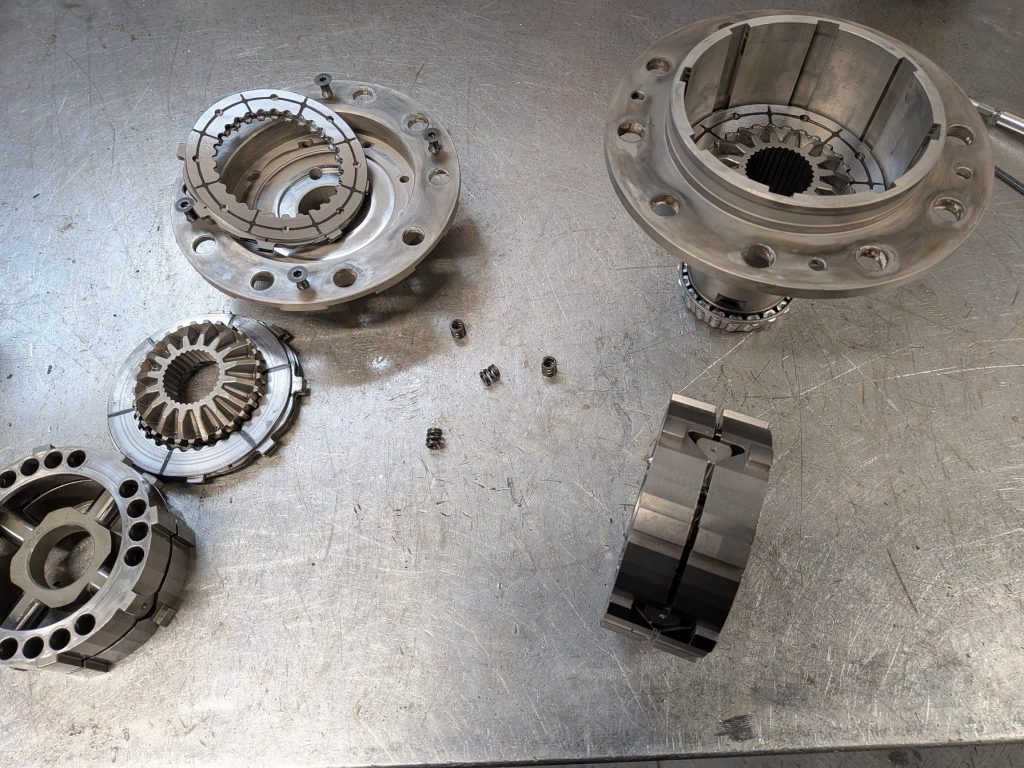
Clutch-type LSD (Salisbury / ZF): The benchmark system for motorsport and bespoke tuning. Using pressure rings, friction discs, steel plates and Belleville preload washers, you can dictate precisely when and how firmly the differential locks.
E-diff. Electronically controlled limited-slip differentials are inherently variable by design, actuated via electronic signals from a dedicated control unit. Whether you can make custom calibration changes depends entirely on access to that controller.
Tuning parameters of a clutch-type LSD
Setting up a clutch-type LSD revolves around three main elements:
1. Ramp angles
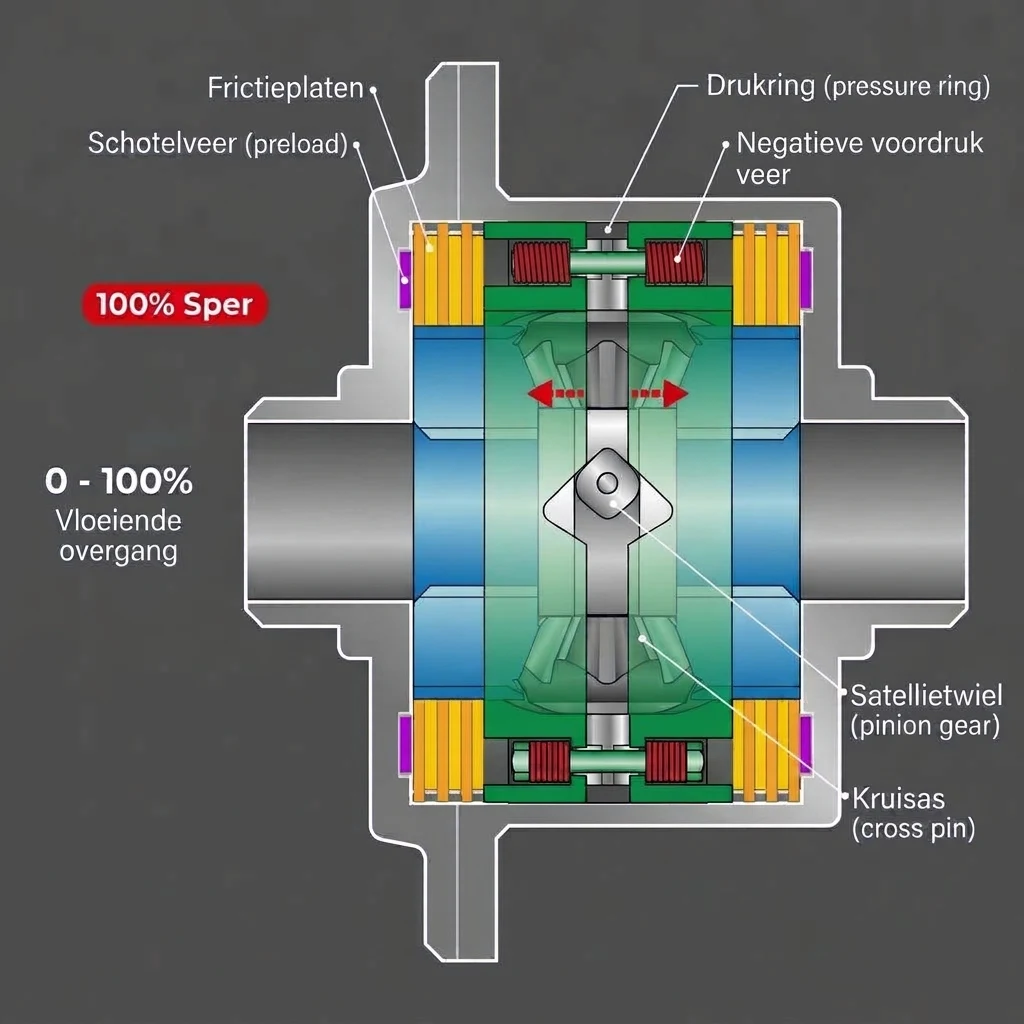
The angle of the machined ramps in the pressure rings, against which the cross-pin rests, determines how rapidly and forcefully the clutch plates are clamped together. This governs the dynamic, torque-sensitive component of the locking action. Light throttle = low locking force Heavy throttle = high locking force
Steep angle (e.g. 30°): Fast, aggressive locking action with high clamping force.
Shallow angle (e.g. 60°): Progressive, gradual build-up of locking action.
Because acceleration (Drive) and deceleration (Coast) ramp angles are selected independently, this produces the familiar LSD configurations:
1-Way: Locks under acceleration (drive) only. Ideal for front-wheel-drive cars to prevent turn-in understeer off-throttle.
1.5-Way: Full locking under acceleration, with milder locking under braking and downshifts. This stabilises the rear axle under braking without pushing the nose wide at turn-in.
2-Way: Equal locking action under both acceleration and lift-off/deceleration. Well suited to drifting to maintain a consistent, predictable slide through transitions.
1.5-Way: can also be configured in reverse—for example on a rear-engined Porsche 911, where strong locking stability under braking is often even more critical than under acceleration.
2. Preload
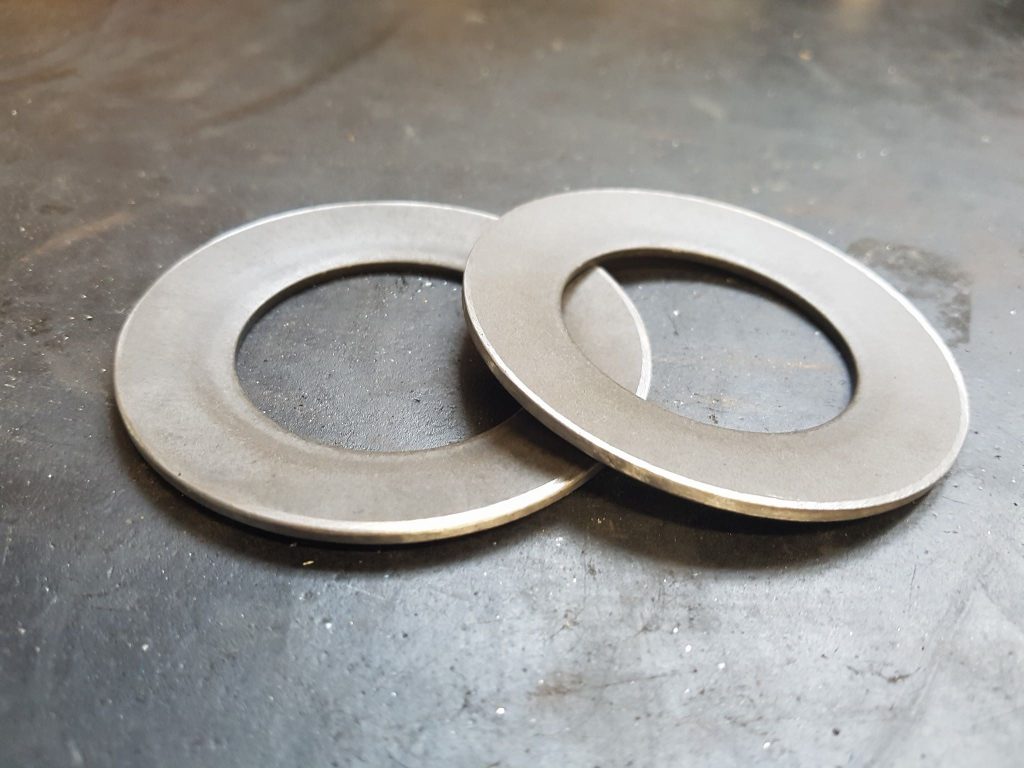
Preload is set by Belleville washers (conical spring washers) or coil springs that maintain a constant static clamping load on the clutch pack:
High preload: Immediate response and minimal delay as soon as one wheel loses traction. Drawback: increased initial understeer, tyre scrub and chattering during tight low-speed manoeuvres (such as parking).
Low preload: Smooth and refined on the road. Drawback: if the unloaded inside wheel suddenly loses contact over a kerb or crest, the LSD may react too slowly, and clutch plate wear increases due to higher slip across the friction discs.
3. Clutch plate configuration and friction material
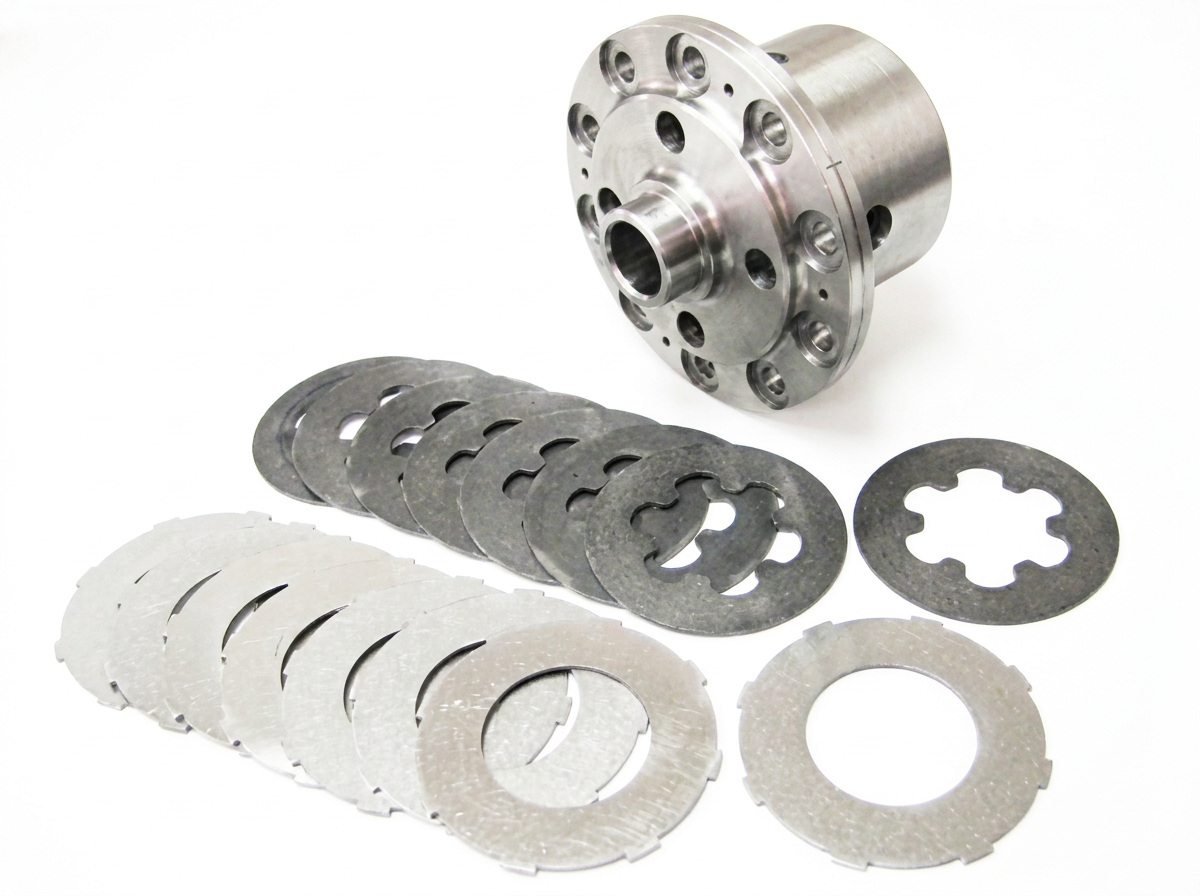
Plate stacking: By rearranging the sequence of internally splined friction discs and externally lugged steel plates, you alter the number of active friction interfaces and therefore the maximum locking percentage.
Material: Plain steel plates bite immediately and aggressively (suited to drift and rally), whereas sintered bronze, molybdenum or carbon-lined friction discs engage more progressively and operate more quietly, though they cost more and often require a higher plate count.
Beware of cheap aftermarket clutch plates: these are frequently made from the wrong grade of steel (laser-cut mild structural steel is cheap and widely available, yet intended for general fabrication and welding rather than wear resistance and flatness under heat), and low-grade friction coatings wear off rapidly, causing the LSD to become overly harsh and erratic in short order.
Oil and additives: Always run the specified LSD gear oil formulated with the correct friction modifiers to prevent clutch chatter, squealing and overheating.
4. Negative preload (OS Giken specific)
Alongside the parameters above, OS Giken incorporates an additional tuning feature in its Super Lock and TCD differentials. Negative preload uses small internal coil springs that apply counter-pressure holding the pressure rings closed against ramp activation. Adjusting this spring rate shapes the progressive lock-up character in much the same way as changing ramp angles, but is more cost-effective and allows far finer calibration.
Low counter-spring pressure = Fast, aggressive locking action with high clamping force.
High counter-spring pressure = Progressive, gradual build-up of locking action.
Symptoms and troubleshooting
Is the car not behaving as desired on track? Use this diagnostic guide to fine-tune the differential:
Turn-in understeer
Cause: Excessive locking on deceleration (coast) or overly high static preload. The locked rear axle resists yaw and pushes the front axle straight ahead.
Solution: Select a shallower coast ramp angle, switch to a 1.5-way configuration, change the clutch plate arrangement/material or reduce spring preload.
Inside wheel spins up on corner exit
Cause: Insufficient locking under acceleration or worn clutch plates.
Solution: Choose a steeper drive ramp angle, measure clutch pack thickness or re-stack to activate additional friction surfaces; adding a touch more preload is often beneficial as well.
Snap oversteer
Cause: The transition from open to locked is too abrupt (commonly caused by an aggressive ramp angle paired with zero preload).
Solution: Increase static preload slightly to smooth out the transition into lock.
Shift lock under engine braking
Cause: Insufficient locking on deceleration, allowing engine braking torque to lock or slip the rear wheel with the least grip first.
Solution: Use a more aggressive coast ramp profile or increase static preload.
Running-in and maintenance of a clutch-type LSD
Running-in procedure: After installation, warm the differential gently for 20 minutes of normal driving, followed by 15 minutes of slow figure-of-eights in an open car park. This beds the friction surfaces in evenly. This procedure mainly applies to sintered metal friction discs; other friction materials derive very little benefit from it.
First oil change: Drain and replace the gear oil after roughly 500 to 1,000 km to flush initial bedding-in wear particles out of the casing immediately.
Inspection: Periodically measure the static breakaway torque with a torque wrench on the hub nut to detect clutch pack wear in good time.
Knowledge & experience of Hardeman Motorsport
Since our founding in 2011, our focus has been dedicated to understanding, building and perfecting differentials. Through years of intensive hands-on testing across a wide range of marques, OEM drivetrains, motorsport applications and custom clutch-type LSD builds, we know exactly how engineering theory translates onto the tarmac and gravel.
Our expertise enables us to translate your requirements and driving style into a custom-built differential calibrated for maximum performance.
Curious about the options or pricing for your car? Feel free to contact us for expert advice.
We carry overhaul and replacement components in stock for a wide range of limited-slip differentials.
LSD tuning sim:
Below you will find our interactive simulator for tuning a clutch-type LSD, illustrating the available setup parameters and how each adjustment affects locking behaviour.
Need advice or a quote for your differential or chassis?
Send us your VIN and intended use for a tailored workshop quote, or order parts directly at Motorsportparts.nl.