
A preload LSD is our collective term for static limited-slip differentials—static in the sense that the locking torque remains constant under all operating conditions. Aside from changing the oil specification, the locking level always stays the same. Ideally, this type of LSD is set up with just enough preload to allow the wheels to rotate at different speeds silently during tight car-park manoeuvres, while providing just enough internal resistance to generate traction on slippery surfaces.

In terms of operation, it functions like an open differential fitted with one or more friction plates that resist differentiation. This design is really only suited to light off-road work and everyday road driving in low-grip conditions, because the differential maintains a fixed breakaway resistance—for example, 90 Nm—both at idle speed and under full-throttle acceleration. Consequently, this type of LSD is widely used in American vehicles such as various Mustangs and 4x4s, though we have also encountered it in the Toyota Supra, Mazda MX-5 (marketed as the Tochigi Fuji Super LSD, and later on the 2.0 MX-5 ND as the Torque-Sensing Super LSD), and older Mercedes-Benz models.

Operation
For motorsport and spirited driving, it is unfortunately inadequate (or at least far from ideal): as soon as more than 90 Nm per wheel is applied through the differential, any excess torque still follows the path of least resistance just like an open differential. A static 90 Nm is relatively little torque bias to drive the loaded wheel harder, and the unloaded wheel is easily overwhelmed by the torque sent to it. A clutch-type LSD (ramp-actuated) or a Torsen delivers traction far more efficiently because it increases or decreases locking force dynamically according to load, resulting in less understeer and greater traction (*when properly set up). Furthermore, a ramp-type clutch LSD is considerably more predictable because—unlike both preload and Torsen differentials—its locking action does not depend on road resistance remaining present at both rear wheels.
Advantages
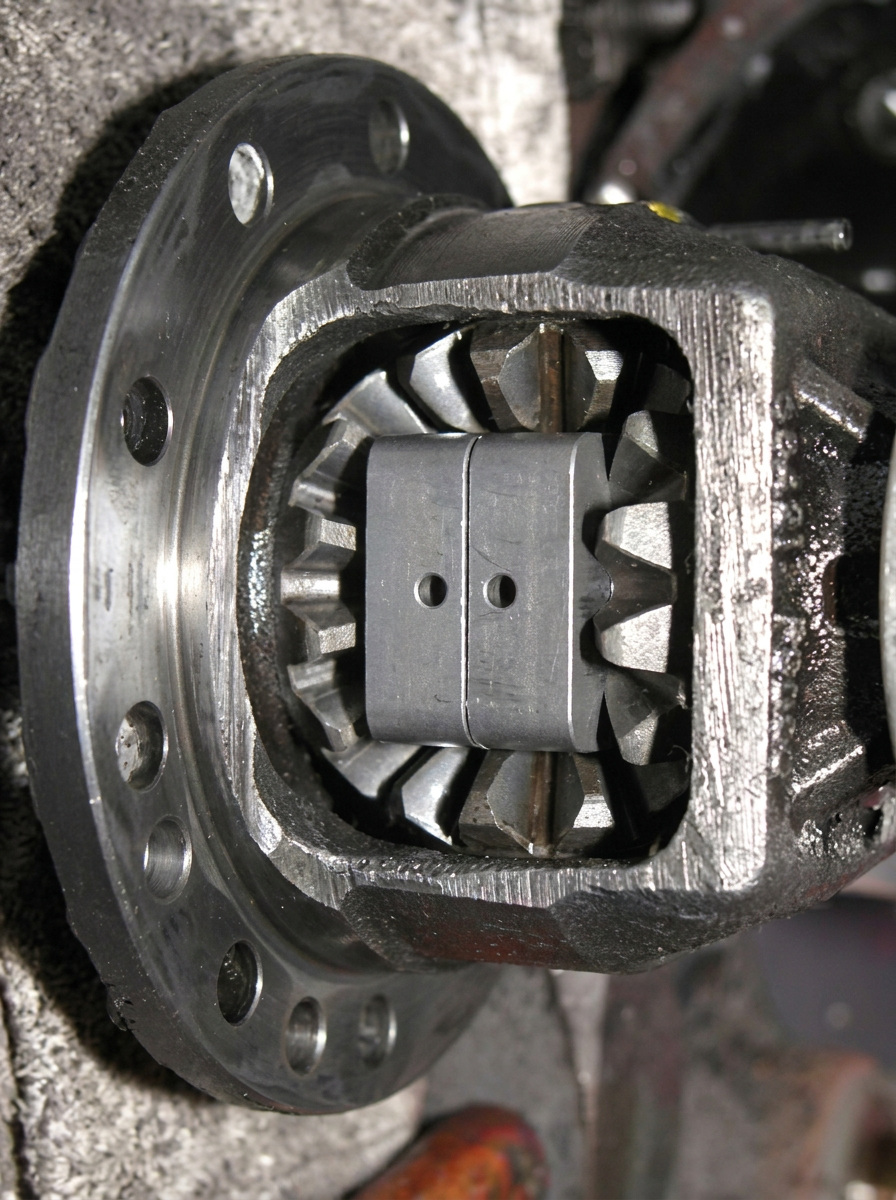
The major advantage of this system, however, is that it is considerably less expensive to manufacture than other types of limited-slip differential. Conversion kits are even available to convert a standard open differential into this type of static LSD, such as Phantom Grip or RacingDiffs. These kits use small springs to apply axial pressure against the output shafts and side gears, creating static friction resistance. While this is arguably the cheapest way to generate a locking effect, it is also one of the least effective, and installation can be fairly involved as grinding or machining is sometimes required. In addition, friction-based preload units wear over time and require periodic rebuilding—something that is not possible with a drop-in LSD conversion kit.
Naturally, we can also carry out the installation of this type of differential for you.