
How does a differential actually work?
Drive torque from the engine is transmitted through the gearbox and the differential to the driven wheels. Because the driven wheels sometimes need to rotate at different speeds, the differential makes this possible. Imagine if your car were 10 metres wide and had to negotiate a tight corner. The outside wheel would then have to cover a much greater distance than the inside wheel. Exactly the same principle applies to a car of normal dimensions, although the difference is naturally somewhat smaller. A solid axle driven by a single sprocket (as used on go-karts) would cause the inside wheel to scrub through every corner, resulting in tyre wear and poor handling at higher speeds (which is also one of the reasons karts spin around so quickly). The differential therefore distributes drive torque across the wheels while allowing them to rotate at different speeds.
And what about a limited-slip differential?
While an open differential is a clever mechanical concept, it is not ideal. Because of how an open differential works, one wheel can remain stationary while the other wheel spins. If you put the car on a workshop lift and let it run in gear, you can therefore easily hold one wheel stationary by hand.
If you use a car not merely as a means of transport, but also to drive as fast as possible, this is a major disadvantage. Imagine lining up on the starting grid as the light turns green. You try to launch as quickly as possible, but one wheel is sitting in a puddle of water or oil. That wheel will spin furiously, while the other wheel remains (virtually) stationary on high-grip tarmac. Similarly, when taking a sharp corner and the car rolls, the inside wheel presses down less firmly on the road or may even lift off the ground completely. Especially once the inside wheel hangs in the air, it can spin freely, meaning the other wheel is no longer driven. In the image below, you can clearly see how the wheels can lift off the ground. Ultimately, an open differential causes the drive torque from the engine to follow the path of least resistance—going to whichever wheel turns most easily, i.e. the wheel with the least grip.
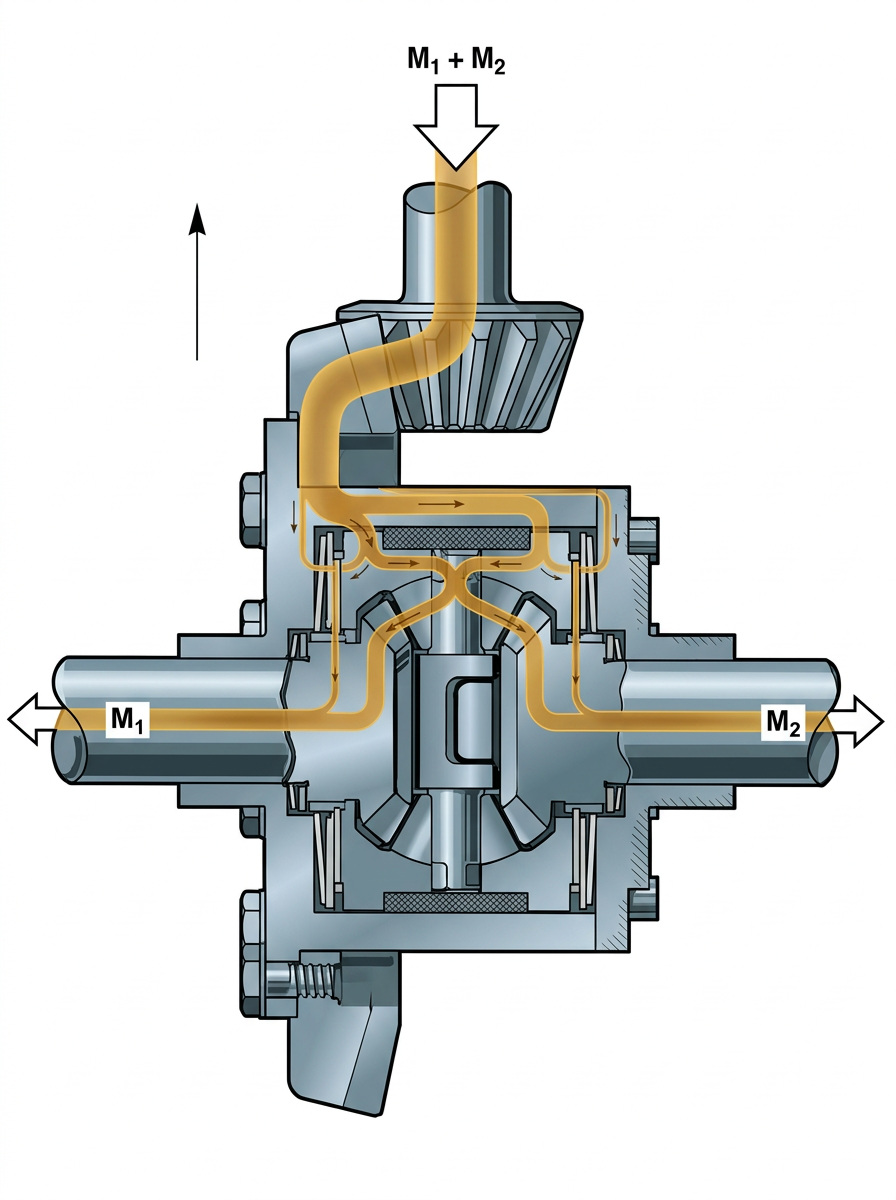
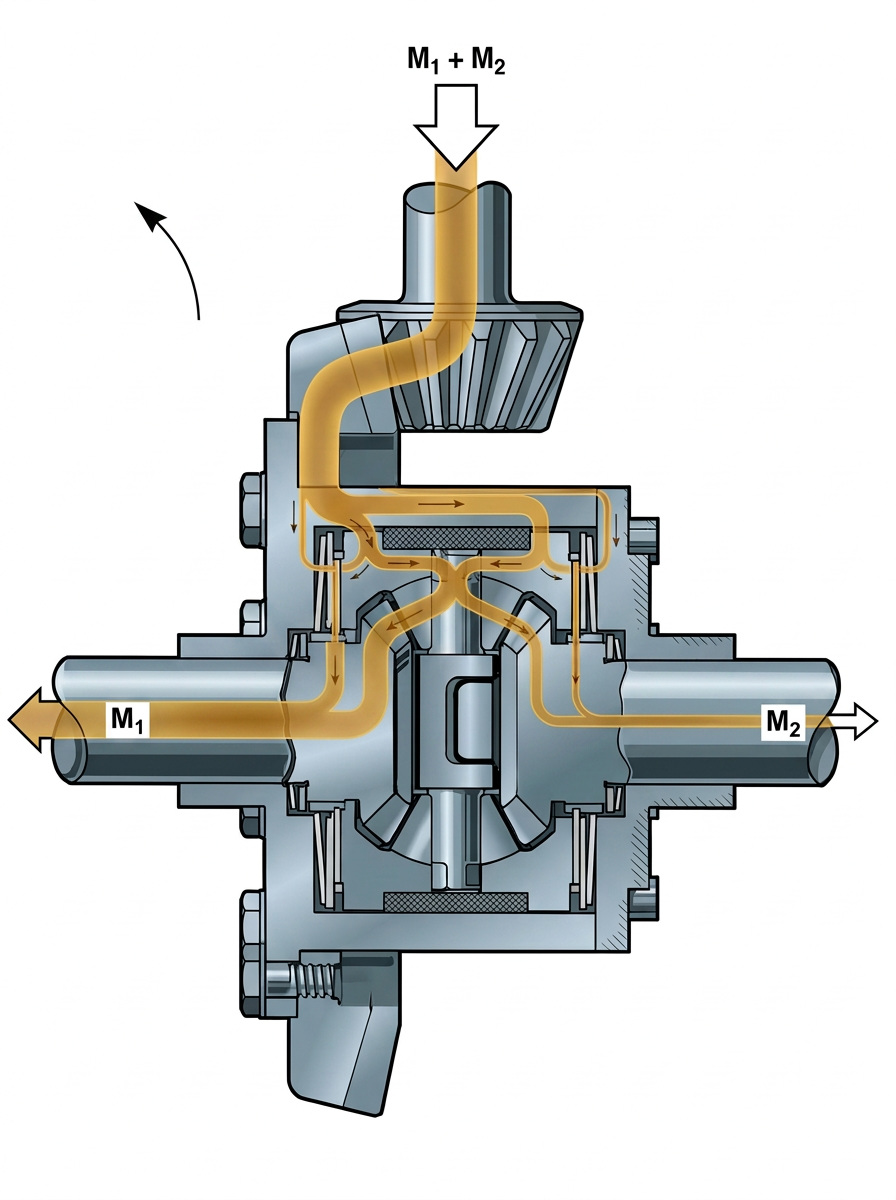
What you need to overcome this is a limited-slip differential (LSD). Its locking action allows the differential to do its job, but only up to a defined limit. The beneficial effect is that two wheels will always be driven, even when one of the wheels is on a slippery surface or hanging in the air. There can still be a difference in rotational speed, but never more than a set locking percentage.
View the frequently asked questions about limited-slip differentials here.
Still have questions? Contact us now